A fuller review of last weekend to follow but first I thought I'd just write a summary of how warblers have fared this spring. In short: it's been a bumper season.
Every spring I try to make an effort to count singing warblers as they arrive from Africa (come on, just how amazing is that). Although most warbler species are loud and distinctive singers there's a number of problems for me surveying them - weather and timing being the chief ones. With only a few survey days to play with if I visit too early in April or too late in May I would certainly miss some birds.
Numbers, therefore, vary from one year to the next and some of that is my surveying rather than population change. Having said that I've got a sense over the years of general trends. Timing and weather were good this year so what follows are likely higher than in a normal survey.
Note that I'm not claiming to count every singing male in the area - much habitat is out of reach. This is especially true of some prime warbler habitat - hedgerows/scrub, woods and wet areas. But, what I have is a fairly consistent effort to survey the same areas every year for 13 years!
Sedge Warbler - 20 males
This is the highest total in all the survey years. TA normal return would be 10-15, and the trend is fairly stable though they are confusingly up and down. Kelk Beck is the stronghold and accounts for 15 this year. Five elsewhere is a good score. Perhaps it really is a good year for them.
Reed Warbler - 2 males
There are three small reedbed sites where this species is regularly recorded, each typically hosting one or two males. This year two sites had one each and the third had none. Reed Warblers can arrive very late so it's possible this situation will be different in June.
Blackcap - 34 males
Another highest total in the survey years. As long as there's lots of cover Blackcaps are ok - gardens, big hedges, woodland. A typical year recently would see around 20 counted. There's been a few years where I haven't been very thorough in counting Blackcaps (as low as 12) but even so this appears genuinely to be a bumper year and the long-term trend has been upward.
Garden Warbler - 2 males
You never know where this species is going to appear - there are no guaranteed sites. I've never had more than three in a year so in that respect this year is typical. Woodland edge and tall scrub are the favoured habitats. Both this year's birds were in places I've never heard them before. The song can be tricky to differentiate from Blackcap and it's likely I've counted a few Gardens as Blackcaps over the years (must try harder).
Lesser Whitethroat - 11 males
Something of a mystery, this species. Their numbers appear to vary wildly from year to year and yet even the individual bushes they sing from are used again and again. A typical year would be 5-10 males, 14 in 2014 is the highest. Large bushes in hedgerows or scrub are by far the preferred habitat.
(Common) Whitethroat - 48 males
By some significant margin the largest count over the survey years. They were everywhere - and provided the main motivation for writing this piece. In 2018 a total of 28 was the largest count. A return of 20-25 would be normal. Long-term (discounting this spring) the trend is slighly upward. Whitethroats almost exclusively use hedgerows and perhaps farm stewardship practices have benefitted this species over recent years.
Chiffchaff - 32 males
Another highest total, eclipsing the 26 in 2017. April is the peak time for counting Chiffchaff. By mid-May they quieten down and there's no new arrivals to count. They are the most woodland of all our warblers local habitat though they will use more open scrub habitat like Blackcaps. There's no doubt this species has increased over the years.
Willow Warbler - 15 males
Recent years have seen 10-14 males counted so this is at the top end of normal. Last year's count of only 8 males was hopefully an anomaly - there was no particular lack of effort surveying. Woodland, scrub and large hedgerows are the favoured habitat but even in the best looking places they are thinly distributed. In the 1990s they outnumbered Chifchaffs but that's unthinkable now.
A couple of absences...
Cetti's Warbler - a male heard singing at the same site in both 2017 and 2018 raised hopes of expansion, in line with the situation across the region. So far this year, nothing doing. There's still time though!
Grasshopper Warbler - only recorded in two years recently, both at different sites near Kelk Beck. Clearly this is not a species one can expect every year so there's nothing much to read into it's absence.
A couple of photos...
Whitetroats were particularly active during this visit with several seen making song flights and singing from very prominent perches - something they don't readily do for much of the season.
Tuesday, 21 May 2019
Thursday, 2 May 2019
April Showers
A bit of a game of two halves at the weekend. Saturday was almost constant rain. Not ideal, but what are you going to do eh? Sunday was better, dry at least. The highlight was really just catching up with all the summer migrants - in March's visit it was still too early even for Chiffchaff.
Despite the rubbish weather the timing must have been ideal to catch males at their singing peak - a very high number of Blackcap and Chiffchaffs were counted. However, a Sedge Warbler total of five is very low and hopefully more about the weather/arrival time.
Other than that a Curlew was a decent year tick!
Saturday 27th & Sunday 28th April
Mute Swan - 29 at Wansford, plus 3 others
Greylag Goose - 16
Canada Goose - 1
Gadwall - 6
Tufted Duck - 13
Red-legged Partridge - 6
Grey Partridge - 2
Little Grebe - 3
Cormorant - 8
Little Egret - 3
Heron - 4
Sparrowhawk - 1
Buzzard - 11
Kestrel - 6
Oystercatcher - 2 pairs
Lapwing - 18
Snipe - 1
Curlew - 1
Lesser Black-backed Gull - 2
Cuckoo - 1 calling briefly AM Saturday
Great Spotted Woodpecker - 2
Sand Martin - 55+
House Martin - 15+
Swallow - 60+
Yellow Wagtail - 4
Mistle Thrush - 7
Sedge Warbler - 5
Reed Warbler - 2
Blackcap - 34
Garden Warbler - 2
Lesser Whitethroat - 9
Whitethroat - 17
Chiffchaff - 32
Willow Warbler - 8
Jay - 1
Linnet - 75 (flocks of 35+20+20)
Bullfinch - 1
Butterflies were at a premium with the weather conditions - just one each of Orange Tip, Speckled Wood and a 'white'.
A dead newt (photo below) was a surprise, picked up on the roadside. Presumably it had wandered from a nearby garden pond.
Baby Blackbird at Harpham.
Bunny munching spring crop.
Buzzard looking for food.
Three Little Egrets are hanging on from winter. In the last few years as they've become regular they tend to have left by late March so this is unusual. That said, one summered last year so it's possible these lot will try it.
Common Newt found dead on the roadside.
A leap of 14 in the yearlist.
078 Cuckoo
079 Blackcap
080 Chiffchaff
081 Whitethroat
082 Lesser Whitethroat
083 Willow Warbler
084 Swallow
085 House Martin
086 Sand Martin
087 Garden Warbler
088 Sedge Warbler
089 Yellow Wagtail
090 Reed Warbler
091 Curlew
Despite the rubbish weather the timing must have been ideal to catch males at their singing peak - a very high number of Blackcap and Chiffchaffs were counted. However, a Sedge Warbler total of five is very low and hopefully more about the weather/arrival time.
Other than that a Curlew was a decent year tick!
Saturday 27th & Sunday 28th April
Mute Swan - 29 at Wansford, plus 3 others
Greylag Goose - 16
Canada Goose - 1
Gadwall - 6
Tufted Duck - 13
Red-legged Partridge - 6
Grey Partridge - 2
Little Grebe - 3
Cormorant - 8
Little Egret - 3
Heron - 4
Sparrowhawk - 1
Buzzard - 11
Kestrel - 6
Oystercatcher - 2 pairs
Lapwing - 18
Snipe - 1
Curlew - 1
Lesser Black-backed Gull - 2
Cuckoo - 1 calling briefly AM Saturday
Great Spotted Woodpecker - 2
Sand Martin - 55+
House Martin - 15+
Swallow - 60+
Yellow Wagtail - 4
Mistle Thrush - 7
Sedge Warbler - 5
Reed Warbler - 2
Blackcap - 34
Garden Warbler - 2
Lesser Whitethroat - 9
Whitethroat - 17
Chiffchaff - 32
Willow Warbler - 8
Jay - 1
Linnet - 75 (flocks of 35+20+20)
Bullfinch - 1
Butterflies were at a premium with the weather conditions - just one each of Orange Tip, Speckled Wood and a 'white'.
A dead newt (photo below) was a surprise, picked up on the roadside. Presumably it had wandered from a nearby garden pond.
Baby Blackbird at Harpham.
Bunny munching spring crop.
Buzzard looking for food.
Three Little Egrets are hanging on from winter. In the last few years as they've become regular they tend to have left by late March so this is unusual. That said, one summered last year so it's possible these lot will try it.
Common Newt found dead on the roadside.
A leap of 14 in the yearlist.
078 Cuckoo
079 Blackcap
080 Chiffchaff
081 Whitethroat
082 Lesser Whitethroat
083 Willow Warbler
084 Swallow
085 House Martin
086 Sand Martin
087 Garden Warbler
088 Sedge Warbler
089 Yellow Wagtail
090 Reed Warbler
091 Curlew
Tuesday, 19 March 2019
Blown Away
That was hard work at the weekend. So. Much. Wind. Aaargh.
A pretty light set of sightings due to the challenging conditions, but as ever, some gems. The Whooper Swans from February are still present. Six this time, despite being convinced there were five last month. I either missed one (possible, they were distant and with Mutes) or one has joined them. Other sightings included a drake Shoveler and a Jack Snipe - both useful year ticks!
Saturday 16th & Sunday 17th March
Mute Swan - 48 (43 together near Wansford)
Whooper Swan - 6 in the same spot as Feb
Greylag Goose - 44
Canada Goose - 24
Wigeon - 110
Gadwall - 4
Shoveler - 1 at Wansford
Teal - 30+
Tufted Duck - 17
Little Grebe - 2
Cormorant - 66 (new record - see previous comment)
Little Egret - min 5 but probably 7
Grey Heron - 8
Sparrowhawk - 1
Buzzard - 25
Kestrel - 4
Oystercatcher - 2
Lapwing - 56
Jack Snipe - 1 at Kelk Beck
Snipe - 11
Green Sandpiper - 3
Lesser Black-backed Gull - 2 adults flying NE
Herring Gull - 170+
Woodpigeon - flock of 1000+ at Lowthorpe
Great Spotted Woodpecker - 1
Meadow Pipit - 2
Fieldfare - 6
Goldfinch - flock of 26
Bullfinch - 1
Yellowhammer - flocks of 28+30
Also Frog spawn noted at Lowthorpe.
I'm not going to apologise for more egret shots. I love 'em!
Little Egret again.
Tame Red-leg just emerging from a garden in Lowthorpe.
Drake Shoveler at Wansford. Hard bird to find locally.
Out of focus Whooper Swans (it was dusk!)
Additions to the year list - a modest three.
075 Lesser Black-backed Gull
076 Jack Snipe
077 Shoveler
A pretty light set of sightings due to the challenging conditions, but as ever, some gems. The Whooper Swans from February are still present. Six this time, despite being convinced there were five last month. I either missed one (possible, they were distant and with Mutes) or one has joined them. Other sightings included a drake Shoveler and a Jack Snipe - both useful year ticks!
Saturday 16th & Sunday 17th March
Mute Swan - 48 (43 together near Wansford)
Whooper Swan - 6 in the same spot as Feb
Greylag Goose - 44
Canada Goose - 24
Wigeon - 110
Gadwall - 4
Shoveler - 1 at Wansford
Teal - 30+
Tufted Duck - 17
Little Grebe - 2
Cormorant - 66 (new record - see previous comment)
Little Egret - min 5 but probably 7
Grey Heron - 8
Sparrowhawk - 1
Buzzard - 25
Kestrel - 4
Oystercatcher - 2
Lapwing - 56
Jack Snipe - 1 at Kelk Beck
Snipe - 11
Green Sandpiper - 3
Lesser Black-backed Gull - 2 adults flying NE
Herring Gull - 170+
Woodpigeon - flock of 1000+ at Lowthorpe
Great Spotted Woodpecker - 1
Meadow Pipit - 2
Fieldfare - 6
Goldfinch - flock of 26
Bullfinch - 1
Yellowhammer - flocks of 28+30
Also Frog spawn noted at Lowthorpe.
I'm not going to apologise for more egret shots. I love 'em!
Little Egret again.
Tame Red-leg just emerging from a garden in Lowthorpe.
Drake Shoveler at Wansford. Hard bird to find locally.
Out of focus Whooper Swans (it was dusk!)
Additions to the year list - a modest three.
075 Lesser Black-backed Gull
076 Jack Snipe
077 Shoveler
Tuesday, 5 March 2019
Post-February
Review for visit two weeks ago. The previous visit was icy cold but since then there's been a blast of summer with June-like temperatures and even a couple of Swallows appearing at Bempton (the earliest ever in Yorkshire).
The Whooper Swans were still in the same oilseed field. Most previous records are birds flying over and of the handful that have been on the ground I can't recall any staying for more than a day.
Another highlight was an unprecedented count of 51 Cormorant (double figures is unusual). Having said that, it appears that up to 20 birds have been flying east and west over Kelk at various times of the day, usually together, for several weeks now, i.e. in the direction of Wansford.
Note that Flamborough have recorded some big counts recently (e.g. check 27th Jan here). Birds seen over Kelk are thought to be almost exclusively of the nominate 'carbo' suspecies. It would be interesting to know if this 'influx' are these or continental 'sinensis', or both. Intriguing.
Also noted, 'only' 4 Little Egret, 2 Peregrine (together!), 2 early Oystercatcher.
Saturday 16th & Sunday 17th February
Mute Swan - 27
Whooper Swan - 5
Pink-footed Goose - 100+ heading N
Greylags - 120
Canadas - 42
Wigeon - 180
Gadwall - 8
Teal - 44
Tufted Duck - 8
Little Grebe - 4
Cormorant - 51 at Wansford (+3 over Kelk later)
Little Egret - 4
Heron - 19
Sparrowhawk - 2
Buzzard - 16
Kestrel - 5
Peregrine - 2 together
Oystercatcher - 2 are possibly the earliest recorded
Lapwing - 180
Snipe - 1
Woodcock - 2
Green Sandpiper - 4
Redshank - 2
Herring Gull - 60
Collared Dove - flock of 18
Kingfisher - 1
Great Spotted Woodpecker - 4
Meadow Pipit - 2
Fieldfare - 400+ in several flocks up to 250
Redwing - 14
Jay - 1
Jackdaw - 800+ flying to roost
Linnet - 40
Bullfinch - 2
Also,
Bat (Pippistrelle?) - 1 at Kelk at dusk on 17th is an early date
Roe Deer - 23
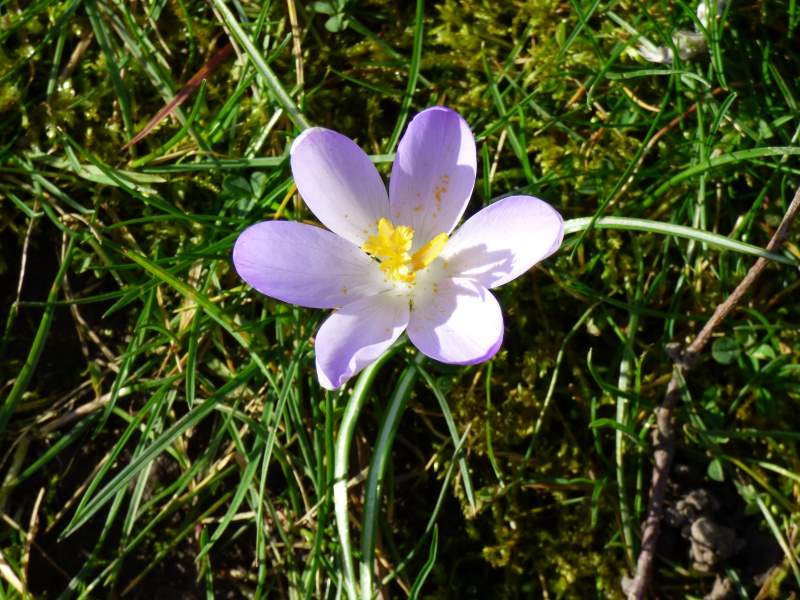
Crocus at Lowthorpe. Spring!
Lovely close view of Dunnock. Much overlooked and overrated.
Fieldfares in tree. A good winter for them.
Arty shot of geese with the evening moon.
Redshank at Wansford. Two together represents a good record these days.
Yearlist up to 73, with Grey Wagtail reported since making 74. Not bad.
065 Pink-footed Goose
066 Redshank
067 Canada Goose
068 Tufted Duck
069 Gadwall
070 Coot
071 Skylark
072 Oystercatcher
073 Bullfinch
074 Grey Wagtail
The Whooper Swans were still in the same oilseed field. Most previous records are birds flying over and of the handful that have been on the ground I can't recall any staying for more than a day.
Another highlight was an unprecedented count of 51 Cormorant (double figures is unusual). Having said that, it appears that up to 20 birds have been flying east and west over Kelk at various times of the day, usually together, for several weeks now, i.e. in the direction of Wansford.
Note that Flamborough have recorded some big counts recently (e.g. check 27th Jan here). Birds seen over Kelk are thought to be almost exclusively of the nominate 'carbo' suspecies. It would be interesting to know if this 'influx' are these or continental 'sinensis', or both. Intriguing.
Also noted, 'only' 4 Little Egret, 2 Peregrine (together!), 2 early Oystercatcher.
Saturday 16th & Sunday 17th February
Mute Swan - 27
Whooper Swan - 5
Pink-footed Goose - 100+ heading N
Greylags - 120
Canadas - 42
Wigeon - 180
Gadwall - 8
Teal - 44
Tufted Duck - 8
Little Grebe - 4
Cormorant - 51 at Wansford (+3 over Kelk later)
Little Egret - 4
Heron - 19
Sparrowhawk - 2
Buzzard - 16
Kestrel - 5
Peregrine - 2 together
Oystercatcher - 2 are possibly the earliest recorded
Lapwing - 180
Snipe - 1
Woodcock - 2
Green Sandpiper - 4
Redshank - 2
Herring Gull - 60
Collared Dove - flock of 18
Kingfisher - 1
Great Spotted Woodpecker - 4
Meadow Pipit - 2
Fieldfare - 400+ in several flocks up to 250
Redwing - 14
Jay - 1
Jackdaw - 800+ flying to roost
Linnet - 40
Bullfinch - 2
Also,
Bat (Pippistrelle?) - 1 at Kelk at dusk on 17th is an early date
Roe Deer - 23
Crocus at Lowthorpe. Spring!
Lovely close view of Dunnock. Much overlooked and overrated.
Fieldfares in tree. A good winter for them.
Arty shot of geese with the evening moon.
Redshank at Wansford. Two together represents a good record these days.
Yearlist up to 73, with Grey Wagtail reported since making 74. Not bad.
065 Pink-footed Goose
066 Redshank
067 Canada Goose
068 Tufted Duck
069 Gadwall
070 Coot
071 Skylark
072 Oystercatcher
073 Bullfinch
074 Grey Wagtail
Monday, 4 March 2019
Buzz
Running late again. Visit report from 16-17 Feb to follow. In the meantime here's a picture of a Buzzard that landed on the hedge right outside houses in Kelk. Picture taken from an upstairs window.
Monday, 4 February 2019
Twenty, Nineteen, January, February
Fudge time. I'm pretending last weekend was January on the basis a) I couldn't make a visit in the actual calendar month of January and b) it's a cunning justification for another February visit.
Dominated by snow and cold it was a very wintery weekend. Lots of areas seemingly devoid of small birds (except gardens) Highlights were 5 Whooper Swan, Water Rail, Peregrine, Short-eared Owl.
One intriguing report has been of a possible Nuthatch visiting gardens up and down Great Kelk. At least three people have heard it and described the call (Nuthatch was my suggestion, not theirs) but as yet it hasn't been seen enough to describe it, beyond 'a small bird'.
Hopefully it will reveal itself before it disappears. I spent a while on Sunday morning looking but to no avail. To make matters worse it had put in a brief appearance 'half an hour ago'. Nooo!
EDIT (6-feb): Nuthatch turned out to be an odd-sounding Great Tit.
Saturday 2nd & Sunday 3rd February
Mute Swan - 5
Whooper Swan - 5
Greylag Goose - 175
Wigeon - 150
Teal - 60
Mallard - 50
Red-legged Partridge - 12
Grey Partridge - 4
Cormorant - 2
Little Egret - 3
Grey Heron - 2
Sparrowhawk - 2
Buzzard - 12
Kestrel - 7
Peregrine - 1
Lapwing - 60 (50+10)
Snipe - 1
Woodcock - 2
Green Sandpiper - 3
Stock Dove - flock of 21
Barn Owl - 2
Short-eared Owl - 1
Great Spotted Woodpecker - 3
Meadow Pipit - 3
Fieldfare - 80
Redwing - 1
Mistle Thrush - 7
Coal Tit - 1
Jay - 2
Corvid - 3000+ flying to roost
(~500 Jackdaw/2500 Rook)
Roe Deer - 17
Grey Squirrel - 1 roadkill
Four of the five Whoopers. Very unusual for mid-winter, most of the recent sightings have been of birds returning north in March/April.
Terrible shot of a Barn Owl. You get the idea though.
Blackbird coming to bird feed in a garden.
Best way to find a Buzzard in winter? Look at all the lone trees.
Fly-by Mute Swans on their way to join the Whoopers.
A strong start to the year list with a total of 64, and that doesn't include several obvious birds like Skylark and Coot.
Dominated by snow and cold it was a very wintery weekend. Lots of areas seemingly devoid of small birds (except gardens) Highlights were 5 Whooper Swan, Water Rail, Peregrine, Short-eared Owl.
One intriguing report has been of a possible Nuthatch visiting gardens up and down Great Kelk. At least three people have heard it and described the call (Nuthatch was my suggestion, not theirs) but as yet it hasn't been seen enough to describe it, beyond 'a small bird'.
Hopefully it will reveal itself before it disappears. I spent a while on Sunday morning looking but to no avail. To make matters worse it had put in a brief appearance 'half an hour ago'. Nooo!
EDIT (6-feb): Nuthatch turned out to be an odd-sounding Great Tit.
Saturday 2nd & Sunday 3rd February
Mute Swan - 5
Whooper Swan - 5
Greylag Goose - 175
Wigeon - 150
Teal - 60
Mallard - 50
Red-legged Partridge - 12
Grey Partridge - 4
Cormorant - 2
Little Egret - 3
Grey Heron - 2
Sparrowhawk - 2
Buzzard - 12
Kestrel - 7
Peregrine - 1
Lapwing - 60 (50+10)
Snipe - 1
Woodcock - 2
Green Sandpiper - 3
Stock Dove - flock of 21
Barn Owl - 2
Short-eared Owl - 1
Great Spotted Woodpecker - 3
Meadow Pipit - 3
Fieldfare - 80
Redwing - 1
Mistle Thrush - 7
Coal Tit - 1
Jay - 2
Corvid - 3000+ flying to roost
(~500 Jackdaw/2500 Rook)
Roe Deer - 17
Grey Squirrel - 1 roadkill
Four of the five Whoopers. Very unusual for mid-winter, most of the recent sightings have been of birds returning north in March/April.
Terrible shot of a Barn Owl. You get the idea though.
Blackbird coming to bird feed in a garden.
Best way to find a Buzzard in winter? Look at all the lone trees.
Fly-by Mute Swans on their way to join the Whoopers.
A strong start to the year list with a total of 64, and that doesn't include several obvious birds like Skylark and Coot.
Friday, 4 January 2019
Dec End
Quick review for December. It was generally very quiet and didn't feel very wintery at all. Either birds haven't fully arrived yet or they've left, or a bit of both. The main highlight was the brief appearance of a Great White Egret, for the fourth winter in a row. I wonder if the second one is hiding out there... maybe 2019 will reveal!
29-30th December
Mute Swan - 7
Greylag Goose - 120
Teal - 120
Mallard - 50
Red-legged Partridge - 60
Grey Partridge - 28
Little Grebe - 1
Cormorant - 4
Great White Egret - 1 btw Foston/Wansford
Little Egret - 5
Grey Heron - 2
Sparrowhawk - 1
Buzzard - 10
Kestrel - 10
Lapwing - 30
Snipe - 2
Green Sandpiper - 3
Great Black-backed Gull - 4
Barn Owl - 2
Meadow Pipit - 1
Grey Wagtail - 2
Fieldfare - 170
Redwing - 1
Jay - 1
Roe Deer - 19
No new species so the year list stalls and finishes at 113. Not bad.
A few piccies...
1. Roe Deer. An impressive total of 19 seen over the weekend.
2. Mute Swans enjoying a small flood patch.
3. No one told these ladybirds that it's winter, at Lowthorpe Church.
4. Important egret-heron business to be discussed.
5. More egret pictures. I can't get tired of the wee beauties!
Happy 2019!
29-30th December
Mute Swan - 7
Greylag Goose - 120
Teal - 120
Mallard - 50
Red-legged Partridge - 60
Grey Partridge - 28
Little Grebe - 1
Cormorant - 4
Great White Egret - 1 btw Foston/Wansford
Little Egret - 5
Grey Heron - 2
Sparrowhawk - 1
Buzzard - 10
Kestrel - 10
Lapwing - 30
Snipe - 2
Green Sandpiper - 3
Great Black-backed Gull - 4
Barn Owl - 2
Meadow Pipit - 1
Grey Wagtail - 2
Fieldfare - 170
Redwing - 1
Jay - 1
Roe Deer - 19
No new species so the year list stalls and finishes at 113. Not bad.
A few piccies...
1. Roe Deer. An impressive total of 19 seen over the weekend.
2. Mute Swans enjoying a small flood patch.
3. No one told these ladybirds that it's winter, at Lowthorpe Church.
4. Important egret-heron business to be discussed.
5. More egret pictures. I can't get tired of the wee beauties!
Happy 2019!
Subscribe to:
Posts (Atom)