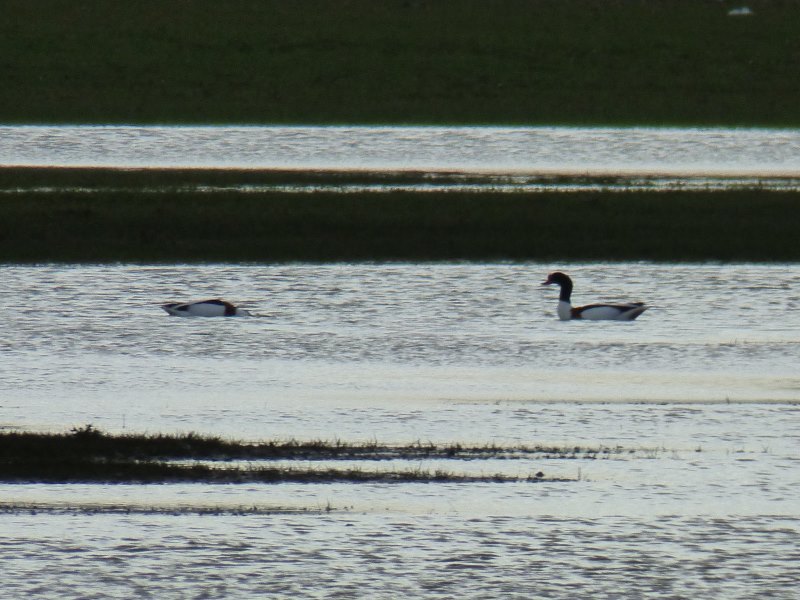
I managed to squeeze a visit in at the end of August last week. Update to follow but the highlights were the first Common Sandpiper in four years and first Greenshank for three.
A few non-bird sights in photos...
1. Common Blue. By no means easy to find locally but there were several together at the edge of this field at Foston.
2. Common Darter. By far the most widespread of the dragonflies they are quite common along hedgerows.
3. The new view from Lowthorpe Bridge following heavy cut back of the bushes on the right hand side of the beck.
4. Ruddy Darter. At least I think it is. This one was along a track in Kelk.
5. Scary big 'shroom. No idea what. Found at the base of a big Beech tree. There was a few of them in a cluster together.
Yearlist climbed by a modest, but quality 3, to 104
102 Greenshank
103 Common Sandpiper
104 Corn Bunting
Tuesday, 4 September 2018
Monday, 16 July 2018
Flycatcher, spotted
Hot action!
Exhausting work for little birding reward. Luckily a Spotted Flycatcher was on hand at Harpham to save the weekend. My first locally since spring 2015. There were two other year ticks in the form of Great Black-backed Gull and Hobby.
14th-15th July
Mute Swan - pair with 1 'mid-sized' cygnet
Greylags - 40+
Canada Goose - 18
Gadwall - 2, unusual in summer (poss breeding?)
Tufted Duck - 1
Heron - 5
Sparrowhawk - 1
Buzzard - 10
Kestrel - 3
Hobby - 1
Oystercatcher - 2
Lapwing - flock of 40
Lesser Black-backed Gull - 1
Great Black-backed Gull - 1
Stock Dove - flock of 10
Swift - flock of 300+ over Wansford
Great Spotted Woodpecker - 2
'hirundines' - increased since May but still low nos
Yellow Wagtail - proven breeding at Kelk. 2 others noted.
Mistle Thrush - 1
Sedge Warbler - 5
Spotted Flycatcher - 1 at Harpham
Bullfinch - 1
Reed Bunting - several
Lots of butterflies around, including an abundance of whites (300+), plenty of Ringlet, Meadow Brown, Small Tortoiseshell, Peacock (double figures of each), also 1 Red Admiral, 2 Painted Lady, 1 Comma.
A Black-tailed Skimmer at Gembling is possible a new species locally for me (need to check!). A Common Darter was along Kelk Beck and several Hawkers (probably Migrant Hawkers but I'm not entirely sure) were seen. My recording of dragonflies is intermittent at best - must try harder.
1. Meadow Brown. A very common and widespread hedgerow butterfly.
2. Ringlet. Much as above although especially in July when they can be abundant.
3. Small White. In my notes I lazily write 'white sp' against counts of the three white butterfly species. I have never got the hang of quickly identifying them without peering closely and so it would take forever to sort them all out. I think all three are abundant but not sure which is the most so.
4. Yellow Wagtail. This male was food carrying and there was at least two others calling nearby. There's probably 3-5 pairs across the area, though this is the only proven one so far this summer.
5. Buzzard. Not the best month for seeing them but the weather seemed to encourage having a good old soar about, mostly very high up, though this one obliged lower-down enough for a photo.
Yearlist...
099 Spotted Flycatcher
100 Great Black-backed Gull
101 Hobby
Friday, 13 July 2018
May
Here's a belated review of my visit in May. Alas I wasn't able to make a visit in June, it's been busy busy busy with one thing and another.
As reported at the time the highlight was a singing Cetti's Warbler for the second year.
19th and 20th May.
Mute Swan - 6
Greylag Goose - 24
Canada Goose - 10
Shelduck - 1
Gadwall - 4
Teal - 1
Mallard - 30+
Tufted Duck - 8
Red-legged Partrigde - 5
Grey Partridge - 2
Little Grebe - 2
Cormorant - 1
Little Egret - 2
Heron - 9
Sparrowhawk - 5
Buzzard - 13
Kestrel - 8
Oystercatcher - 1
Lapwing - 22
Lesser Black-backed Gull - 1
Herring Gull - 40+
Cuckoo - 2 different males calling
Swift - 18+
Kingfisher - 1
Great Spotted Woodpecker - 3
Sand Martin - plenty
Swallow - low numbers (maybe 20+)
House Martin - low numbers (15+)
Meadow Pipit - 1
Yellow Wagtail - 4
Cetti's Warbler - 1
Sedge Warbler - 10
Reed Warbler - 3
Blackcap - widespread
Garden Warbler - 1
Lesser Whitethroat - 2
Whitethroat - 28 is a healthy total!
Chiffchaff - widespread
Willow Warbler - 5
Bullfinch - 1
Quite a few butterflies on the wing. Most numerous were Orange Tip (20+) followed by several Peacock, Small Tortoiseshell, and whites and 3 Speckled Wood.
A male Four-spotted Chaser (dragonfly) was at Kelk Beck.
1. Canada Goose - proven breeding! They don't breed every year (or they hide well) and there's never more than a couple of pairs across the area. I guess they just prefer parks and built up areas.
2. Pair of Gadwall. There is a peak in sighthings every spring as birds disperse from wintering sites to search out breeding sites. They are hard to locate in summer though ducklings have been seen in a few years. My guess is they don't breed every year.
3. Sedge Warbler. The total of 10 males present is rather low.
4. Shelduck. Another species that has bred but doesn't particularly favour the area. The last known success was quite a few years ago now and they've become quite scarce.
5. And finally - Stock Dove. An understated but much underrated bird.
Yearlist additions:
094 - Swift
095 - Yellow Wagtail
096 - Cetti's Warbler
097 - Reed Warbler
098 - Garden Warbler
Monday, 21 May 2018
Cett Again
In May last year I located a singing Cetti's Warbler. He's back again in exactly the same spot. I guess my next goal should be to ACTUALLY SEE IT. To be fair it's pretty inaccessible / distant so I may have to admit defeat until another one pops up somewhere more accommodating. I'm not complaining :)
An otherwise fairly quiet weekend was mostly about checking in on some of the later migrants. It appears there are still arrivals to come, especially Swifts and hirundines. Full report of the weekend to come but instead here's a picture of the moon for no particular reason than it looked nice in Saturday's fading evening light.
.
Thursday, 10 May 2018
Lamp shade
An update on my previous post where I included a photo and comment about Lamprey's. Reality, it seems, is better than I thought due in no small part to my fishy observation skills. Credit to James & Chris on River Hull Birds Facebook group.
Apparently there are both River and Brook Lamprey present. The former is up to three times the size of the former.
I've set myself some homework reading http://ec.europa.eu/environment/life/project/Projects/index.cfm?fuseaction=home.showFile&rep=file&fil=SMURF_lamprey.pdf
This is the picture from the previous post. Most likely a Brook Lamprey.
This is probably the same one.
However, this one shows a River Lamprey on the right and a Brook in the middle. Size difference immediately obvious. Just above the two appears to be a Minnow, pointing right. I'm not sure why I thought the first photo was the best one and I didn't even notice the Minnow at the time. Always learning!
In other news, a Wheatear was on freshly seed-drilled field in Kelk last week... and therefore:
093 Wheatear
Wednesday, 2 May 2018
April
Highlight for April was undoubtely my 4th sighting of Osprey (3 in spring, 1 autumn). Apart from that it was all about arriving migrants. The weather was warm and many birds would have been fresh-in. However, while there was a good range of species clearly a huge number of birds are still to arrive. No Yellow Wagtails, only 1 Sedge Warbler and 2 Whitethroat.
Saturday 21st & Sunday 22nd April
Mute Swan - 38 together at Wansford
Greylag Goose - 20+
Canada Goose - 4
Wigeon - 1 female Kelk Beck, with very ragged wings
Gadwall - 22 across 6 sites
Teal - 1 male Kelk Beck
Tufted Duck - 23
Red-legged Partridge - 7
Grey Partridge - 2
Little Grebe - 2
Cormorant - 1
Little Egret - none
Grey Heron - 5 incl 1 flying NE very high up
Osprey - 1 north over Harpham (my 4th record, 3rd in spring)
Marsh Harrier - 1 male
Sparrowhawk - 3
Buzzard - 17
Kestrel - 10 incl 2 together (see photo)
Peregrine - imm. trying/failing to catch a Feral Pigeon
Oystercatcher - 1
Lapwing - 30+ mostly being territorial
Curlew - 1 over Lowthorpe
Green Sandpiper - 2 at Wansford, prob wintering birds
Lesser Black-backed Gull - 6
Herring Gull - 130+
Cuckoo - 1 calling
Barn Owl - 1
Little Owl - 1
Great Spotted Woodpecker - 5
Sand Martin - 17
Swallow - 30
House Martin - 9
Meadow Pipit - 1
Sedge Warbler - 1
Blackcap - 19
Lesser Whitethroat - 8
Common Whitethroat - 2
Chiffchaff - 14
Willow Warbler - 7
Linnet - 2 flocks totalling 150 (90+60)
Quite a few Peacock and Small Tortoiseshell about plus a bonus Brimstone.
Very high water levels at Kelk Beck. Not normal for April.
Greylag. Presumably there was a partner sitting nearby.
Grey Partridge, distant.
This pair of Kestrels were patiently watching a tractor harrowing the field.
I think this is a River Lampreys (Lampetra fluviatilis) but not 100% sure. There was a small shoal (if that's the right word?) of them in a few metre stretch of beck. I've certainly never seen them around here before. It looks the right kind of habitat.
Yearlist climbed significantly...
079 Swallow
080 Lesser Black-backed Gull
081 Curlew
082 Blackcap
083 Whitethroat
084 Lesser Whitethroat
085 Willow Warbler
086 Osprey
087 House Martin
088 Sand Martin
089 Peregrine
090 Sedge Warbler
091 Little Owl
092 Cuckoo
Wednesday, 28 March 2018
Beast be gone
With the beastly-east-ness gone it was business as usual last weekend, give or take the odd Glossy Ibis. Time, then, for a March visit summary.
Lots of fields have surface water. With a bit of luck there will be some patches still left in April that attracts the odd migrant wader. Recent springs have been very lean but Greenshank, Ruff, Dunlin would be likely candidates. But I digress...
Saturday 24th and Sunday 25th March
Mute Swan - 35 at Wansford, +3 elsewhere
Greylag Goose - 18
Canada Goose - 8
Shelduck - 2
Gadwall - 10
Teal - 110 incl flocks of 60 and 40
Tufted Duck - 28 ...and surprisingly a year tick!
Little Grebe - 1
Great Crested Grebe - 1 is the first since 2010
Cormorant - 1
Little Egret - 3
Heron - 11
GLOSSY IBIS - 1
Marsh Harrier - 1
Sparrowhawk - 2
Buzzard - 24
Kestrel - 12
Oystercatcher - 4
Golden Plover - 90
Lapwing - 20
Snipe - 26
Woodcock - 3
Stock Dove - flock of 12
Barn Owl - 7 ... the most in one visit for a long time
Kingfisher - 2
Great Spotted Woodpecker - 4
Skylark - 30+
Meadow Pipit - 3
Fieldfare - 375 in four flocks, max 170
Redwing - 1
Chiffchaff - 2 singing
Linnet - flock of 50+
Bullfinch - 2
Reed Bunting - 6
And now some images.
1. Flock of Fieldfare moving overhead. Although less than in February the total of 375 is still high.
2. Great Crested Grebe at Wansford. Since the demise of Kelk Lake there hasn't been a single record in the area, the last being 2010. Spring always used to be the most likely time to find one.
3. Marsh Harrier. What a stunner. I didn't notice this until it was almost overhead - eyes to the skies!
4. Shelduck on field flood. Odd pairs turn up in spring but then usually disappear after a month or so. Whether they (attempt to) breed every year is unknown but I have seen young in two different years.
5. Starlings hanging out on their own social media. Glossy, yes. Ibis, not at all.
Yearlist update
072 Chiffchaff
073 Glossy Ibis
074 Gadwall
075 Oystercatcher
076 Tufted Duck
077 Shelduck
078 Great Crested Grebe
Subscribe to:
Posts (Atom)