Monday, 25 November 2019

A Tale of Gloomy Halves

November visit in the bag. Time to move on. Good grief that was a gloomy weekend. Saturday was a wash out though I managed to get out for a couple of hours at the end of the afternoon. Sunday was at least dry but oh was the visibility atrocious.

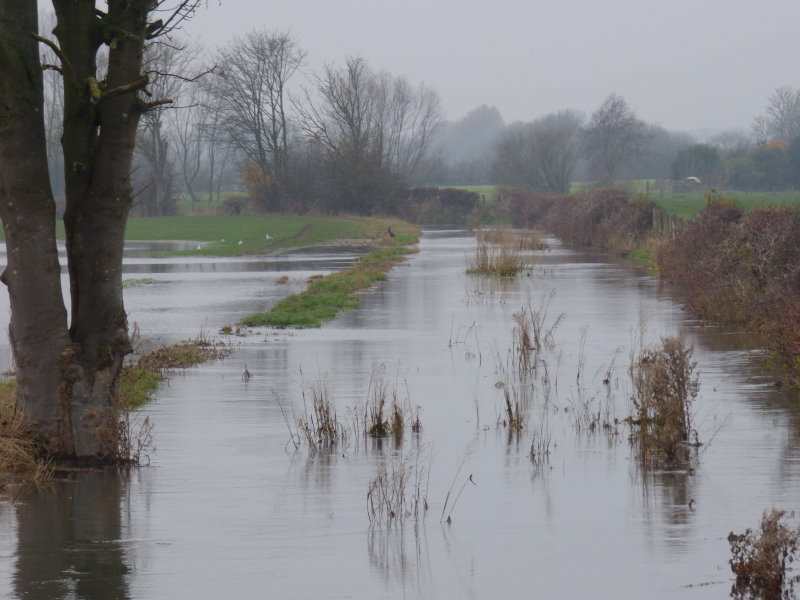
There has been A LOT OF WATER fall on the area. The beck is much higher than I've seen it for a good few years. Field floods are everywhere. As tough as that is for farmers and wildlife, it'll be interesting to see if anything unsual makes use of them over winter and into spring.

No new species for the year but some decent highlights: a new high of 14 Little Egret, Marsh Harrier, Water Rail, Short-eared Owl and Little Owl. Some outstanding counts of commoner birds were c500 Teal, 900 Herring Gull, and a respectable 90 Yellowhammers.

Saturday 23rd & Sunday 24th November

Mute Swan - 13
Wigeon - 20
Gadwall - 4
Teal - c500 (350+ Kelk, 150+ Gembling)
Mallard - 120+
Tufted Duck - 2
Red-legged Partridge - 40+ at Lowthorpe (released)
Cormorant - 2
Little Egret - 14 (11 Wansford, 3 Kelk)
Heron - 6
Marsh Harrier - 1 at Wansford
Buzzard - 13
Kestrel - 5
Water Rail - 1 at Kelk Beck
Lapwing - 22
Snipe - 1
Green Sandpiper - 2
Herring Gull - c900 (600 Wansford, 300 Kelk)
Great Black-backed Gull - 1
Woodpigeon - flock of 800
Short-eared Owl - 1 at Kelk
Little Owl - 1
Kingfisher - 1
Great Spotted Woodpecker - 1
Skylark - flock of 25+
Fieldfare - 56 (3 flocks)
Redwing - 18
Tree Sparrow - 14
Linnet - 120 in 2 flocks (90+30)
Bullfinch - 1
Yellowhammer - 90 in 2 flocks (65+25)

Also noted
Bat sp - 1 at Kelk at dusk
Weasel - 1 at Kelk
Squirrel - 2
Roe Deer - 8

Over the limit. Wansford. Yikes.


And still they keep coming. Counting them is normally difficult as they move around a lot and hide out of view. I've had one day count possibly into double figures before but this is the first confirmed.  It is possible they're more visible than usual because the drains are full, forcing them into the fields where all 14 were seen. These three were on a field at Wansford.


Part of a huge Teal flock. I guess they're attracted to the flooded fields at quiet/safe times of the day but happy to squeeze into small spots in the day for roosting. Even so, I've not seen numbers quite on this scale here before.


Until December - stay dry everyone!

Wednesday, 23 October 2019

Make Egrets Great Again

My old friend the Great White Egret is back for its fifth winter. Assuming of course it's the same one. Surely it would be even crazier if it were different birds. Hopefully it will play ball a bit more this time - I only saw it once last winter.

An autumnal feel at the weekend. Lots of birds about but nothing particularly unexpected. Hightlights were the Great White Egret, four Green Sandpipers probably settling in for winter, a whopping record count of 600 Herring Gulls, and five each of Grey Wagtail and Jay.

Saturday 19th & Sunday 20th October

Mute Swan - 6
Greylag Goose - 60+
Wigeon - 35
Gadwall - 1
Teal - 160+
Mallard - 120+
Red-legged Partridge - 6
Cormorant - 5
Great White Egret - 1 at Kelk Beck
Little Egret - 4 (3 Kelk, 1 Wansford)
Heron - 5
Sparrowhawk - 5
Buzzard - 18
Kestrel - 8
Golden Plover - 400+ nr Gembling
Lapwing - 80
Green Sandpiper - 4
Lesser Black-backed Gull - 2
Herring Gull - 600, a record count
Great Black-backed Gull - 3
Collared Dove - 23 at Gembling
Tawny Owl - 2
Kingfisher - 1
Great Spotted Woodpecker - 2
Skylark - flock of 25 at Kelk Beck
Meadow Pipit - 2
Grey Wagtail - 5
Redwing - 31, but no Fieldfares
Mistle Thrush - 25 incl 19 together at Gembling
Goldcrest - 2 at Kelk were presumably migrants
Treecreeper - 1
Jay - 5
Jackdaw - 1000+ at pre-roost
Rook - 1000+ at pre-roost
Linnet - 170 in two flocks of 80+90
Bullfinch - 4
Yellowhammer - flock of 23


Part of the 2000-plus Corvid pre-roost at Kelk. It was about 50/50 Jackdaws and Rook from what I could tell. The roost could still climb to 3k by winter though I would expect most of the increase to be Rooks.


The drain at Gembling has breached and created this flood, plus a similar size patch behind me in a winter corn field. Could be interesting for birds over winter and into spring!


All three of the common gulls; Herring, Black-headed and Common Gull. There was an exceptional number of Herring Gulls in the area over the weekend - a record count of 600 - outnumbering the other species.


A heron flying over.


Ropey photo but I'm just pleased to see a Kingfisher sat still for a change. Incredibly this is the first one I've seen along the beck all year.


Two new for the year...

104 Treecreeper
105 Great White Egret

Wednesday, 25 September 2019

If a tree falls in Kelk woods

A surprisingly quiet weekend, but lovely weather for walking. This time last year I was raving about a Raven but no such luck in 2019. The ground is dry and habitat for migrant waders is almost non-existent this autumn. It feels like forever since the last decent wader passage. Bah!

Highlights included a Peregrine, the first Golden Plover of the year, a whopping flock of 230 Goldfinch, and a lone Corn Bunting.

Saturday 21st & Sunday 22nd September

Mute Swan - 11 incl. family of 6
Wigeon - 6
Gadwall - 15
Shoveler - 2
Teal - 1
Mallard - 50+
Tufted Duck - 2
Red-legged Partridge - 2
Grey Partridge - 14
Little Grebe - 4
Cormorant - 30+ at Wansford
Little Egret - 3 at Wansford
Grey Heron - 13
Sparrowhawk - 1
Buzzard - 18
Kestrel - 12
Peregrine - 1
Golden Plover - flocks of 210 + 28
Lapwing - ZERO
Green Sandpiper - 5 possibly 6
Lesser Black-backed Gull - 1
Herring Gull - 120+
Great Black-backed Gull - 1
Little Owl - 1
House Martin - 10+
Swallow - 10+
Meadow Pipit - 30+
Mistle Thrush - 6
Chiffchaff - 5 incl. one in song
Goldfinch - flock of 230 at Kelk Beck
Linnet - 95 in two flocks
Bullfinch - 4
Corn Bunting - 1 at Foston

Also...

Hedgehog - roadkill at Lowthorpe
Roe Deer - 1

Painted Lady - 1
Red Admiral - 11
Small Tortoiseshell - 1
Speckled Wood - 3
White sp. - 40+

Migrant Hawker - 16
Common Darter - 45+

Birds weren't in a posing mood this visit but here's some photos anyway.

Common Darter male. Lots of these seen over the weekend.


And female.


Family of Swans. I haven't seen these before and didn't see a nest anywhere in spring. Hard to say if they bred somewhere hidden nearby or if they have swam up the beck from somewhere.


The huge Beeches bordering Lingholmes Plantation were felled earlier in the month. The wood sometimes holds a large corvid roost (they come and go). Hopefully it's still suitable.


And from the Lowthorpe end. There's a small stream bordering the trees which might be more attractive to water birds now it's opened up. We shall see...


Three additions to the yearlist.

101 Little Owl
102 Golden Plover
103 Great Black-backed Gull

Tuesday, 13 August 2019

Surprising Hobby

Review for August visit. The highlight was obviously the fabulous first SPOONBILL the area.

Not much more than a decade ago my list of 'herons' in the area was firmly stuck on 1 - Grey Heron. Fast forward and it has expanded to include Little Egret, Cattle Egret, Great White Egret, Bittern, Glossy Ibis and Spoonbill. Not bad for an expanse of farmland with a few ditches!

The other highlights over the weekend were a family of Hobbies (2 adults, 2 juveniles together), a Red Kite drifting north, and a Spotted Flycatcher. The wind made observations difficult and I've no doubt I missed quite a bit.

Saturday 10th & Sunday 11th August

Mute Swan - 2
Greylags - 90+
Canadas - 3
Gadwall - 2
Mallard - 100+
Tufted Duck - 11 incl. 6 ducklings
Little Grebe - 9
Cormorant - 2
Grey Heron - 22 at Wansford
Spoonbill - 1 adult
Sparrowhawk - 1
Red Kite - 1 north late morning Sunday
Buzzard - 14
Kestrel - 11
Hobby - pair with 2 young Kelk
... +2 other sightings of adults, Harpham + Foston
Lapwing - 1
Green Sandpiper - 2
Common Gull - 50+ incl first juv. of year
Lesser Black-backed Gull - 20
Herring Gull - 300
Swift - 50
Sand Martin - 50+
Yellow Wagtail - 1
Mistle Thrush - 1
'warblers' - planty of young
Spotted Flycatcher - 1 at Lowthorpe
Coal Tit - 2
Golfinch - flock of 60+
Bullfinch - 1

The wind wasn't particularly favourable for butterflies but I did manage to note a Holly Blue, a Wall, 15 Painted Lady, 3 Red Admiral, 7 Speckled Wood, and a couple of dozen 'whites'. At least on Common Darter was seen along with 4 Migrant Hawker dragonflies.

Green Sandpiper making the most of a local muck heap. I saw it catch a couple of maggots.


One of the adult Hobbies. They can be very unobtrusive. This pair was unknown to me before the weekend. In fact I'd only seen one bird all year, in June. Previous years have often unfolded like this, nothing much happening all summer and a flurry of sightings before they leave in September.


Holly Blue. One of the species that always has its wings closed when perched.


Kestrel. Seem to be doing well in the last couple of seasons. This is not a bad shot for me.


In 30 years of birding around the area I have never seen a gull perched on any of the church towers. No one gave the script to this Lesser Black-backed Gull. Most odd.


Two additions to the year list bring it to a nice round ton.

099 Spoonbill
100 Spotted Flycatcher

Monday, 12 August 2019

Spoon fed

Whoooa SPOONBILL!

This super-fine adult was present on Saturday 10th.


In Yorkshire the vast majority of sightings are either passing along the coast, feeding along the Humber (especially at Blacktoft Sands RSPB) or in the Aire Valley (especially Fairbun Ings).

In recent decades the numbers visiting the county have increased. During the 90s a handful of sightings would be typical but in the last decade or so 10-40 sightings per year has been the norm (birds wander a lot so the actual number of birds will be less). Two or three birds arriving together is not entirely unusual now.

The game changer in Yorkshire is that breeding has taken place at Fairbun Ings since 2017 and the number of birds on the Humber has gone crazy this summer with a total count of 24 at Blacktoft Sands just a week ago!

In the last month there have been sightings at Filey and Spurn. Closer still, two juveniles spent some time at Tophill Low earlier this summer.

Unsurprisingly this is the first Spoonbill I've recorded in the area. There were two firsts last year, Raven (photos) and Glossy Ibis (photos).

More details and weekend eview to follow...

Friday, 2 August 2019

July noted

... and now to the birds.

Two main highlights. 1) Marsh Harrier finally added to the year list, and 2) Jays have probably bred for the first time since the early 1990s. Having said that, one probably summered at the same site in 2016 and 1-2 have been regular between September and March in most recent winters.

Saturday 27th - Tuesday 30th July

Mute Swan - 2
Greylag Goose - 31
Canada Goose - 4
Tufted Duck - 5
Red-legged Partridge - 3
Grey Partridge - 5
Little Grebe - 12
Cormorant - 1
Grey Heron - 17
Marsh Harrier - 1 'creamcrown'
Sparrowhawk - 1
Buzzard - 23 incl some juvs
Kestrel - 11
Lapwing - 2
Green Sandpiper - 1
Black-headed Gull - 80+ incl some juvs
Lesser Black-backed Gull - 7
Herring Gull - 37
Swift - 150+ over beck on 30th
Great Spotted Woodpecker - 1
House Martin - 150+ at Lowthorpe on 27th
Meadow Pipit - 1
Yellow Wagtail - pair with 3 young, Kelk
Goldcrest - young seen at 2 sites
Coal Tit - 7 at Lowthorpe incl 3+ juvs
Jay - 3 together, probably have bred locally
House Sparrow - 120+ in Little Kelk
Goldfinch - 45 flock Kelk Beck
Bullfinch - 1

One of several juvenile Buzzards noted. It's the 15th summer since the first pair settled in the area (2005). There's a minimum of 10 pairs this year, which I guess means 30-40 birds present at any one time.


House Sparrow pair at Harpham. The colonies at Harpham and Kelk are still healthy. They are very hard to count most of the time but during harvest they will gather together to feed on spilled corn. A whopping 120+ were doing just that in Kelk.


With only one addition to the year list, we're behind normal schedule and still to reach 100.

098 - Marsh Harrier

Thursday, 1 August 2019

Flutter By

A most typical July visit just gone, even allowing for the cranky weather... but we're all used to it, right? While I gather notes together here's some summer butterfly action.

Comma. The only one I've seen so far this year, though they're never easy to find.


Painted Lady. Lots of these beauties still to be seen across the area.


Peacock. I hadn't seen any up to this month but there were 20+ widespread.


Small Copper. Another first for the year. Another species that is not at all common in the area. This one was at Harpham.


Small Skipper. They look more like moths than butterflies. Underrated!


Birds to follow...