Highlight for April was undoubtely my 4th sighting of Osprey (3 in spring, 1 autumn). Apart from that it was all about arriving migrants. The weather was warm and many birds would have been fresh-in. However, while there was a good range of species clearly a huge number of birds are still to arrive. No Yellow Wagtails, only 1 Sedge Warbler and 2 Whitethroat.
Saturday 21st & Sunday 22nd April
Mute Swan - 38 together at Wansford
Greylag Goose - 20+
Canada Goose - 4
Wigeon - 1 female Kelk Beck, with very ragged wings
Gadwall - 22 across 6 sites
Teal - 1 male Kelk Beck
Tufted Duck - 23
Red-legged Partridge - 7
Grey Partridge - 2
Little Grebe - 2
Cormorant - 1
Little Egret - none
Grey Heron - 5 incl 1 flying NE very high up
Osprey - 1 north over Harpham (my 4th record, 3rd in spring)
Marsh Harrier - 1 male
Sparrowhawk - 3
Buzzard - 17
Kestrel - 10 incl 2 together (see photo)
Peregrine - imm. trying/failing to catch a Feral Pigeon
Oystercatcher - 1
Lapwing - 30+ mostly being territorial
Curlew - 1 over Lowthorpe
Green Sandpiper - 2 at Wansford, prob wintering birds
Lesser Black-backed Gull - 6
Herring Gull - 130+
Cuckoo - 1 calling
Barn Owl - 1
Little Owl - 1
Great Spotted Woodpecker - 5
Sand Martin - 17
Swallow - 30
House Martin - 9
Meadow Pipit - 1
Sedge Warbler - 1
Blackcap - 19
Lesser Whitethroat - 8
Common Whitethroat - 2
Chiffchaff - 14
Willow Warbler - 7
Linnet - 2 flocks totalling 150 (90+60)
Quite a few Peacock and Small Tortoiseshell about plus a bonus Brimstone.
Very high water levels at Kelk Beck. Not normal for April.
Greylag. Presumably there was a partner sitting nearby.
Grey Partridge, distant.
This pair of Kestrels were patiently watching a tractor harrowing the field.
I think this is a River Lampreys (Lampetra fluviatilis) but not 100% sure. There was a small shoal (if that's the right word?) of them in a few metre stretch of beck. I've certainly never seen them around here before. It looks the right kind of habitat.
Yearlist climbed significantly...
079 Swallow
080 Lesser Black-backed Gull
081 Curlew
082 Blackcap
083 Whitethroat
084 Lesser Whitethroat
085 Willow Warbler
086 Osprey
087 House Martin
088 Sand Martin
089 Peregrine
090 Sedge Warbler
091 Little Owl
092 Cuckoo
Wednesday, 2 May 2018
Wednesday, 28 March 2018
Beast be gone
With the beastly-east-ness gone it was business as usual last weekend, give or take the odd Glossy Ibis. Time, then, for a March visit summary.
Lots of fields have surface water. With a bit of luck there will be some patches still left in April that attracts the odd migrant wader. Recent springs have been very lean but Greenshank, Ruff, Dunlin would be likely candidates. But I digress...
Saturday 24th and Sunday 25th March
Mute Swan - 35 at Wansford, +3 elsewhere
Greylag Goose - 18
Canada Goose - 8
Shelduck - 2
Gadwall - 10
Teal - 110 incl flocks of 60 and 40
Tufted Duck - 28 ...and surprisingly a year tick!
Little Grebe - 1
Great Crested Grebe - 1 is the first since 2010
Cormorant - 1
Little Egret - 3
Heron - 11
GLOSSY IBIS - 1
Marsh Harrier - 1
Sparrowhawk - 2
Buzzard - 24
Kestrel - 12
Oystercatcher - 4
Golden Plover - 90
Lapwing - 20
Snipe - 26
Woodcock - 3
Stock Dove - flock of 12
Barn Owl - 7 ... the most in one visit for a long time
Kingfisher - 2
Great Spotted Woodpecker - 4
Skylark - 30+
Meadow Pipit - 3
Fieldfare - 375 in four flocks, max 170
Redwing - 1
Chiffchaff - 2 singing
Linnet - flock of 50+
Bullfinch - 2
Reed Bunting - 6
And now some images.
1. Flock of Fieldfare moving overhead. Although less than in February the total of 375 is still high.
2. Great Crested Grebe at Wansford. Since the demise of Kelk Lake there hasn't been a single record in the area, the last being 2010. Spring always used to be the most likely time to find one.
3. Marsh Harrier. What a stunner. I didn't notice this until it was almost overhead - eyes to the skies!
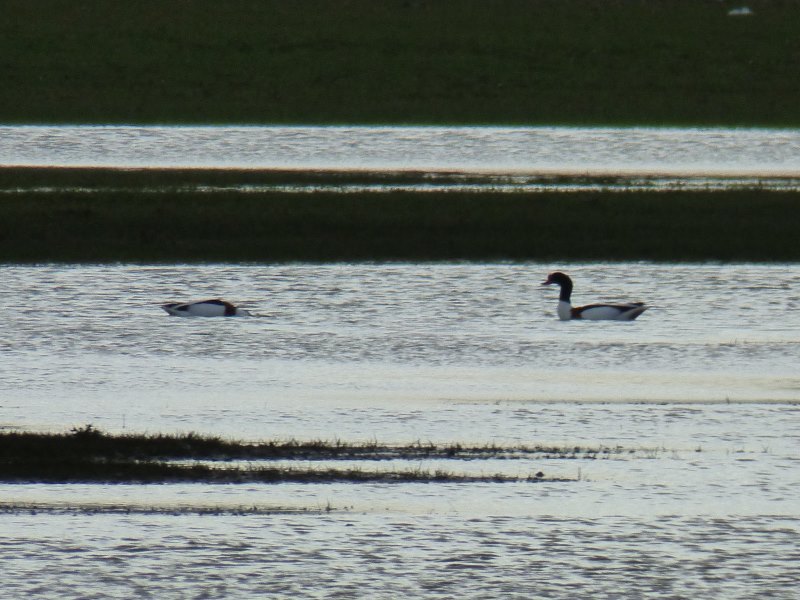
4. Shelduck on field flood. Odd pairs turn up in spring but then usually disappear after a month or so. Whether they (attempt to) breed every year is unknown but I have seen young in two different years.
5. Starlings hanging out on their own social media. Glossy, yes. Ibis, not at all.
Yearlist update
072 Chiffchaff
073 Glossy Ibis
074 Gadwall
075 Oystercatcher
076 Tufted Duck
077 Shelduck
078 Great Crested Grebe
Monday, 26 March 2018
Eye Bliss
Well this wasn't in the script. I almost should know better by now than to be surprised by what turns up, but come on, this is getting ridiculous :)
GLOSSY IBIS in the area. The bird's location is sensitive to disturbance so I'll decline to say where it was for now.
The timing of my visit felt encouraging. I left work on Friday with a 'good weekend' feeling about it. Not least because of the weather. A week earlier and I would have been battling a bitter east wind, the so-called 'Mini Beast from the East' following the 'proper' beast's snow in late February. Instead there was calm, sunshine and double digit temperatures. Spring!
Even so, a relatively unremarkable Saturday unfolded with little to show for it other than the first singing Chiffchaff of the year. Seemingly out of nowhere a strange 'small dark heron' lifted itself 'crow-like' and flew around a bit before coming down nearby.
My camera was on as I was trying to take a picture of something else at the time and fortunately I managed a couple of shots before it vanished. It was obviously a Glossy Ibis. What a way to liven up a weekend.
Glossy Ibis are nationally scarce visitors to the UK from southern Europe. Formerly very rare here, something of an explosion in arrivals has occured following the growth of breeding numbers in Spain and France. Regular influxes have occured since 2007, leading to a pair breding in Lincolnshire in 2014.
In Yorkshire they are still a rare bird. Following a record of four together in 1997 there were none at all in the first decade of the century until 2009, and since then one or two have been seen annually. Autumn is the most likely time for one to arrive, though almost any time is possible. Coastal areas and big wetland reserves dominate the locations of sightings.
Summary of the weekend (7 new species for the year) to follow...
Wednesday, 21 February 2018
Another winter almost over
Definitely still winter but not for long. Snowdrops in flower everywhere, daffodils poking through. Last weekend had that kind of feel about it - one senses birds are getting itchy to move on. Whole areas were very quiet, almost eerily so, and then you'd suddenly encounter flocks.
A record count for Fieldfare - 600 in one flock - comes off the back of an unremarkable winter for the species. They're clearly arrived recently and are gathering before migrating. Similarly, relatively huge counts of Lapwing, Linnet and Yellowhammer don't reflect the last few months.
Aside from this and the two Great White Egrets the picks of the bunch were Water Rail at Gembling, a Jack Snipe along Kelk Beck, 2 Green Sandpipers still wintering, and several Siskin.
17th-18th February 2018
Mute Swan - 31
Teal - 150
Red-legged Partridge - 1
Grey Partridge - 8
Cormorant - 1
Little Egret - 4
Great White Egret - 2
Grey Heron - 4 (surprisingly few!)
Sparrowhawk - 2
Buzzard - 11
Kestrel - 4
Water Rail - 1
Golden Plover - 2 with Lapwing
Lapwing - 715+ in 4 flocks of 100-215
Jack Snipe - 1
Snipe - 17
Green Sandpiper - 2
Woodpigeon - lots, largest flock 800+
Barn Owl - 1
Kingfisher - 1
Great Spotted Woodpecker - 1
Skylark - 20+ singing in Kelk Beck area
Meadow Pipit - 3
Fieldfare - 750+ incl. a flock of 600+
Redwing - 7
Mistle Thrush - 7
Jay - 2
Siskin - 6
Linnet - 180 in two flocks 150+30
Bullfinch - 1
Yellowhammer - 90+ incl. a large flock of 80+
Fifteen added to the year list, to a reasonable total of 71.
Some photos...
Buzzard. Not a weekend for them getting up in the air and showing well. This looks a pale bird, and that eye stripe is pretty distinctive!
Herring Gulls already acting like a loved up pair.
One of several triple-figure flocks of Lapwing totalling over 700 birds. This wouldn't be out of place in September, but is quite exceptional for February.
Song Thrush. Tricky to photograph usually.
Yellowhammer female in Alders rather than their usual choice of thorn hedge/bush.
Roll on spring!
Monday, 19 February 2018
Great White Mystery
For big white birds egrets can't half be elusive. Er, assuming they're present, of course. Following the return of a Great White Egret in November it was disappointing there was no sign of it in either November or December.
Imagine my surprise when TWO were together between Kelk Beck and Wansford on Sunday. Note that two together is not unprecedented - November 2015 (photo).
It's interesting to speculate where these bird have been all winter.
Option 1: they've been here all the time but hidden. Entirely possible, given their habitat preference for drainage channels of which there are many out of sight across the area. That said, much like Little Egrets, they seem to move about a fair bit so I'm surprised I wouldn't have encountered one of them flying somewhere.
Option 2: they have been spending only some of the time here. There have been sightings earlier this month of single birds at Hornsea (8th) and Tophill (2nd), in addition to sightings at several places going back to autumn. That means there's either several locally or just a couple moving about. The latter seems the most feasible explanation. With sightings a little further away at North Cave Wetlands and Spurn it's possible they range very widely all winter (I'm not convinced) or there have been 3-5 birds in the county.
Option 3: there have been three birds passing through this winter, one on November and these two. This suggests either a) I have extraordinary good luck to pick the right days or b) many have passed through. I don't buy either reasoning!
Anyway, here they are. Very distant photos, but identifiable.
Bird 1 - flew with bird 2 but separated and carried on flying along a drain until out of sight.
Bird 2, dropped into this drainage channel but eventually waded around the corner out of sight.
A Little Egret appeared, conveniently demonstrating the size difference.
More from the weekend to follow...
Monday, 22 January 2018
Marsh Confusion
And we're off!
Snow held up play on Sunday and made for a slow start with 56 species noted over the weekend. The pick of the bunch was a female/imm Marsh Harrier along Kelk Beck on Sunday morning. Although regular in summer this is my first record during winter.
Conventional wisdom says they're summer migrants but in recent years more and more have been staying throughout. Blacktoft Sands is the most important site in Yorkshire (and in Northern England?) with a mightly impressive 30 roosting earlier this month. I remember seeing the first pair to return to breed in Yorkshire at Blacktoft in the early 1990s, having become extinct as a species in UK during the 19th century. I would not have imagined many years later I'd be seeing one floating around Kelk on a freezing January morning.
20th-21st January
Mute Swan - 2
Greylag Goose - 150
Wigeon - 200
Teal - 80
Mallard - 110
Grey Partridge - 19
Little Grebe - 1
Cormorant - 3
Little Egret - 5
Grey Heron - 3
Marsh Harrier - 1 'creamcrown'
Buzzard - 5
Kestrel - 4
Lapwing - 100
Snipe - 8
Woodcock - 1
Green Sandpiper - 2
Woodpigeon - flocks of 1800 & 400
Great Spotted Woodpecker - 3
Meadow Pipit - 1
Grey Wagtail - 1
Fieldfare - 130 in several flocks
Redwing - 1
Mistle Thrush - 3
Goldcrest - 1
Coal Tit - 4
Jay - 2 presumably birds from 2017
Carrion Crow - 30+ together
Tree Sparrow - 60 in one flock Kelk Beck
Bullfinch - 5
Yellowhammer - 12
Grey Squirrel - 2
Roe Deer - 16
One of the five Little Egrets. I'm slowly getting closer to a good photo.
Winter moon
Hibernating snails?
Trying and failing to squeeze a bit more birding out of the winter daylight.
Wigeon in a blizzard.
.
Wednesday, 3 January 2018
Annus Lowlistus
Hello 2018. The end of 2017 wasn't especially exciting and the species total of 106 was not improved on, so that's a new low marker. The years 2008-12 averaged 115 while the last 5 years it has dropped to 109. Three initial thoughts on what's contributed to the drop; 1) lack of weather/habitat for autumn wader passage, 2) lack of scarce ducks in winter, 3) decline toward local extinction of species such as Spotted Flycatcher and Turtle Dove.
Anyhoo, here's the final piece of 2017:
28-30th December.
Greylag Goose - 330
Canada Goose - 16
Wigeon - 230
Teal - 290
Mallard - 130
Tufted Duck - 10
Red-legged Partridge - 14
Grey Partridge - 18
Cormorant - 3
Little Egret - 7
Grey Heron - 5
Sparrowhawk - 2
Buzzard - 7
Kestrel - 11
Golden Plover - 24 is unusual for Dec
Lapwing - 40
Snipe - 1
Woodcock - 2
Green Sandpiper - 2
Barn Owl - 1
Kingfisher - 2
Great Spotted Woodpecker - 4
Meadow Pipit - 1
Grey Wagtail - 1
Fieldfare - 110
Redwing - 3
Mistle Thrush - 7
Coal Tit - 2
Treecreeper - 3
Jay - 3
Tree Sparrow - 20
Chaffinch - 30
Siskin - 6
Linnet - 40
Bullfinch - 1
Roe Deer - 16
Young Common Gull
Three Fieldfares. Not easy to get close to!
Dubious parentage alert (bird at front middle). Presumably Canada x Greylag Goose.
Mistle Thrush coming to seed put out on a shed roof.
A distinctively marked Pied Wagtail doing a good impression of continental White Wagtail.
Until next time
Subscribe to:
Posts (Atom)