In truth it was very much the bird doing the dipping, not the crowd, judging by the pictures appearing on social media. For the benefit of anyone mystified by terminology - dipping means failing to seeing the bird you've come to twitch.
The Dipper was on its favourite perch when I went past on Saturday afternoon and again at dusk on Sunday. Here's a summary of the rest of the weekend's sightings.
Saturday 21st & Sunday 22nd February
Mute Swan - 2
Greylags - 41
Gadwall - 12
Teal - 70+
Mallard - 100+
Pochard - 37 at Kelk Lake. An exceptional count for recent years!
Tufted Duck - 11
Red-legged Partridge - 2
Grey Partridge - 4
Sparrowhawk - 1
Common Buzzard - 13
Kestrel - 8
Peregrine - 1 at Gembling, taking a close interest in Lapwings
Golden Plover - 210. Unprecedented count for February.
Lapwing - 180+ including 130 flock at Gembling.
Woodcock - 2
Green Sandpiper - 1
Woodpigeon - large flocks of 1500 & 800 noted.
Tawny Owl - 1
Great Spotted Woodpecker - 1 drumming
Skylark - several in song
Meadow Pipit - 13 at Gembling. Outstanding local count.
Grey Wagtail - 1
Fieldfare - 150+ flock at Foston. 5 over Kelk.
Coal Tit - 1 at Kelk. Hard to find away from Harpham/Lowthorpe.
Dipper - yes
Linnet - flock of 40+
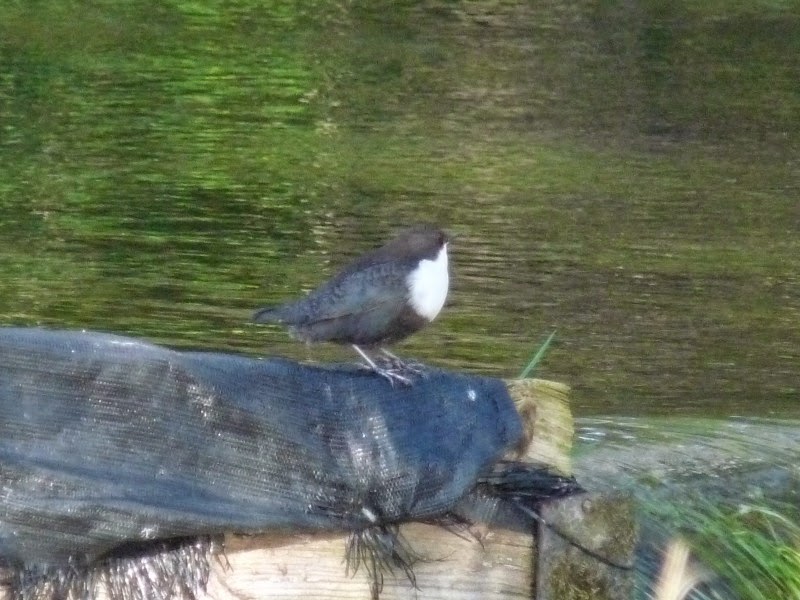
Dipper again. I do hope it manages to find its way home for summer as despite being very lost it has done just fine for the last four months.
I'm guessing it prefers this perch as the sunlight is mostly behind it, allowing it to see the water better.
Also at Harpham, this chunk of boggy ground has finally been drained. It was never much good for birds so it's no great loss, and the farmer's gotta farm etc. Was always nice to walk along the edge full of hope something interesting would poke its head above the grass. Never did, though.
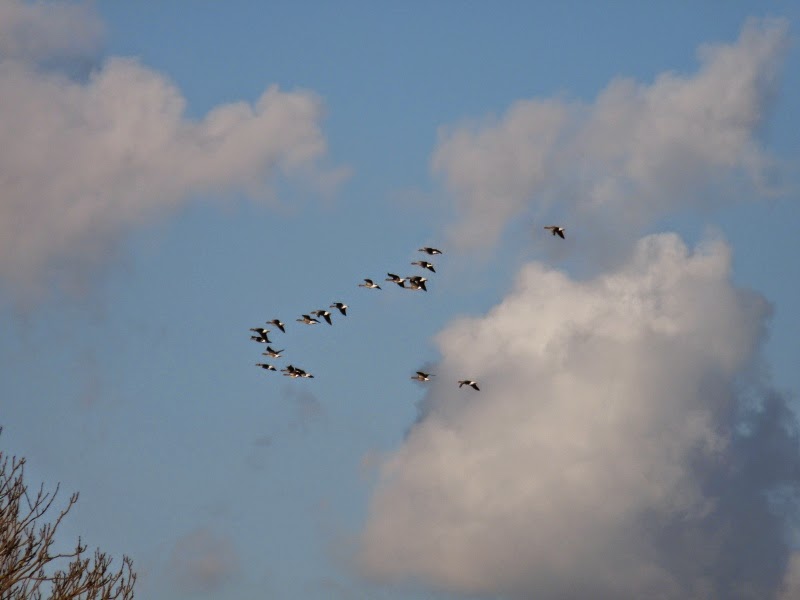
Greylags heading over. There is no regular flock since they were no long able to roost at Kelk Lake due to disturbance. Pairs breed across the area but in winter you have to be in the right place at the right time.
Song Thrush. Nothing unusual there, though I think this might be the first time I've managed to take a recognisable photo of one.
There were ten additions to the yearlist which jumps to 71, which is about average over recent years.
Wednesday, 25 February 2015
Monday, 16 February 2015
Dipper Twitch - Harpham Hits the Headlines
News of the Black-bellied Dipper at Harpham made it on to the twitcher's networks at the weekend. Imagine that, Harpham hits the front page national news!
The bird has been present since October. This was my comment after finding it
http://kelkbirds.blogspot.co.uk/2014/12/dipping-sauce.html
A few high-definition pictures have appeared such as this one from Brett Richards
http://i2.wp.com/birdingfrontiers.com/wp-content/uploads/2015/02/BR20150213152811881-BR.jpg
via Martin Garner
http://birdingfrontiers.com/2015/02/14/a-grand-day-out-in-yorkshire/
And a short video from Martin, too
https://www.youtube.com/watch?v=7J1lVF_lzo4
Apparently the bird didn't want to play ball on Sunday and wasn't seen all day - must have been frustrating for visitors. I wonder if anyone thought to check further down at Lowthorpe road bridge or up at New Road bridge, where my November pictures were taken.
Edit 26/03 - it's a male bird... it has started singing!
http://northernrustic.blogspot.co.uk/2015/03/black-bellied-dipper-harpham-east-yorks.html
The bird has been present since October. This was my comment after finding it
http://kelkbirds.blogspot.co.uk/2014/12/dipping-sauce.html
A few high-definition pictures have appeared such as this one from Brett Richards
http://i2.wp.com/birdingfrontiers.com/wp-content/uploads/2015/02/BR20150213152811881-BR.jpg
via Martin Garner
http://birdingfrontiers.com/2015/02/14/a-grand-day-out-in-yorkshire/
And a short video from Martin, too
https://www.youtube.com/watch?v=7J1lVF_lzo4
Apparently the bird didn't want to play ball on Sunday and wasn't seen all day - must have been frustrating for visitors. I wonder if anyone thought to check further down at Lowthorpe road bridge or up at New Road bridge, where my November pictures were taken.
Edit 26/03 - it's a male bird... it has started singing!
http://northernrustic.blogspot.co.uk/2015/03/black-bellied-dipper-harpham-east-yorks.html
Thursday, 22 January 2015
Twenty Fifteen Sixty
Finally I'm in the right year. Here's a summary of last weekend's visit. Not a bad start at all with 60 species logged.
Saturday 17th & Sunday 18th January
#2 - Part of the ginormous pigeon flock
#3 - The best I could manage. One of the Short-eared Owls hunting along the beck.
#4 - I'm pretty sure Pheasants can't read.
#5 - Starling peek-a-boo!
Saturday 17th & Sunday 18th January
Mute Swan - 5
Gadwall - 1
Teal - 28
Mallard - 30+
Grey Partridge - 18
Little Grebe - 5
Cormorant - 8
Heron - 7
Sparrowhawk - 2
Buzzard - 9
Kestrel - 5
Lapwing - 50+
Snipe - 4
Woodcock - 3
Green Sandpiper - 1
Woodpigeon - 2300. Largest count in recent years.
Barn Owl - 1
Tawny Owl - 1
SHORT-EARED OWL - 2 together!
Kingfisher - 1
Skylark - two flocks of 42 + 71 = 113
Fieldfare - 1 (zero Redwing!)
Treecreeper - 1
Dipper - still at Lowthorpe
Yellowhammer - flock of 35
Also 14 Roe Deer.
A few photos...
#1 - Brrrrrr!
#2 - Part of the ginormous pigeon flock
#3 - The best I could manage. One of the Short-eared Owls hunting along the beck.
#4 - I'm pretty sure Pheasants can't read.
#5 - Starling peek-a-boo!
Till next time!
Tuesday, 20 January 2015
2014 catch up... Nov-Dec
Let's make this quick, I've already done my January visit.
November highlights
Mute Swan - 17
Pink-footed Goose - 500+ south on morning of 23rd. A record day count.
Teal - 170
GOOSANDER - 1 female on beck. Only a couple of previous records.
Cormorant - 2
Little Egret - 1
Grey Heron - 6
Sparrowhawk - 1
GOSHAWK - 1 seen well in flight at dusk. Two previous records.
Buzzard - 7
Kestrel - 5
Golden Plover - 40
Lapwing - 700+. A very high local count.
Green Sandpiper - 1
Little Owl - 2
Kingfisher - 2
Grey Wagtail - 1
Fieldfare - 24
Redwing - 40+
Dipper - 1 still at Harpham/Lowthorpe
Jay - 1
Starling - 900+. An excellent local count.
Chaffinch - 110.
December highlights
Mute Swan - 10
Pink-footed Goose - 5
Bean Goose - 3
SNOW GOOSE - 1 adult white-phase bird. Photo below.
Gadwall - 3
Teal - 250
Grey Partridge - 19
Little Grebe - 6
Cormorant - 2
Grey Heron - 8. It's been a good year for this species.
Sparrowhawk - 1
Buzzard - 9
Kestrel - 9. Also a very good year for this species.
Peregrine - 1
Lapwing - 100+
Snipe - 17. Otherwise it's been a very poor year for this species.
Woodcock - 2
Green Sandpiper - 1
Little Owl - 1
SHORT-EARED OWL - 1. It's been a long wait since my last in 1990s!
Kingfisher - 2
Grey Wagtail - 1
Fieldfare - 36. A very slim year for this thrush.
Redwing - 6. Ditto - where were the winter thrushes this year?
Dipper - seen further down at Lowthorpe bridge this time.
Jay - 1
Yellowhammer - 35. A good flock for recent years.
Also seen were 3 otters together - one large and two small (young?). They didn't seem too fazed by me standing on the bank not far away, as the pictures below suggest.
And with those surprise additions the year list bumped upward to 110, the joint lowest total in recent years but not bad considering the very poor half-time score. Ok ok 109 without the goose. Shh!
106 Goshawk
107 Snow Goose
108 Bean Goose
109 Short-eared Owl
110 Goosander
Totally wild geese. Well most of them certainly are. Probably. The Snow Goose is bottom left and the 3 Bean Geese are in there somewhere (hard to id from this dark/crap photo). I read that a Snow Goose made the trip down the east coast every autumn with Pink-feet in recent years, occasionally being seen in Yorkshire. Of all the birds it has the best credentials for being wild, but, who knows. In it's favour, the bird here is with presumably wild geese, and it was VERY wary (I'd just accidentally flushed them when I took this). On the down side, possibly the same bird appeared down the road at Tophill and has been hanging around with the tame feral Greylags. Damn!
Otter! There were three together, rather unbelievably.
Despite the amazing views I completely failed to get more than one in shot.
January review shortly...
November highlights
Mute Swan - 17
Pink-footed Goose - 500+ south on morning of 23rd. A record day count.
Teal - 170
GOOSANDER - 1 female on beck. Only a couple of previous records.
Cormorant - 2
Little Egret - 1
Grey Heron - 6
Sparrowhawk - 1
GOSHAWK - 1 seen well in flight at dusk. Two previous records.
Buzzard - 7
Kestrel - 5
Golden Plover - 40
Lapwing - 700+. A very high local count.
Green Sandpiper - 1
Little Owl - 2
Kingfisher - 2
Grey Wagtail - 1
Fieldfare - 24
Redwing - 40+
Dipper - 1 still at Harpham/Lowthorpe
Jay - 1
Starling - 900+. An excellent local count.
Chaffinch - 110.
December highlights
Mute Swan - 10
Pink-footed Goose - 5
Bean Goose - 3
SNOW GOOSE - 1 adult white-phase bird. Photo below.
Gadwall - 3
Teal - 250
Grey Partridge - 19
Little Grebe - 6
Cormorant - 2
Grey Heron - 8. It's been a good year for this species.
Sparrowhawk - 1
Buzzard - 9
Kestrel - 9. Also a very good year for this species.
Peregrine - 1
Lapwing - 100+
Snipe - 17. Otherwise it's been a very poor year for this species.
Woodcock - 2
Green Sandpiper - 1
Little Owl - 1
SHORT-EARED OWL - 1. It's been a long wait since my last in 1990s!
Kingfisher - 2
Grey Wagtail - 1
Fieldfare - 36. A very slim year for this thrush.
Redwing - 6. Ditto - where were the winter thrushes this year?
Dipper - seen further down at Lowthorpe bridge this time.
Jay - 1
Yellowhammer - 35. A good flock for recent years.
Also seen were 3 otters together - one large and two small (young?). They didn't seem too fazed by me standing on the bank not far away, as the pictures below suggest.
And with those surprise additions the year list bumped upward to 110, the joint lowest total in recent years but not bad considering the very poor half-time score. Ok ok 109 without the goose. Shh!
106 Goshawk
107 Snow Goose
108 Bean Goose
109 Short-eared Owl
110 Goosander
Totally wild geese. Well most of them certainly are. Probably. The Snow Goose is bottom left and the 3 Bean Geese are in there somewhere (hard to id from this dark/crap photo). I read that a Snow Goose made the trip down the east coast every autumn with Pink-feet in recent years, occasionally being seen in Yorkshire. Of all the birds it has the best credentials for being wild, but, who knows. In it's favour, the bird here is with presumably wild geese, and it was VERY wary (I'd just accidentally flushed them when I took this). On the down side, possibly the same bird appeared down the road at Tophill and has been hanging around with the tame feral Greylags. Damn!
Otter! There were three together, rather unbelievably.
Despite the amazing views I completely failed to get more than one in shot.
January review shortly...
Thursday, 11 December 2014
Because he was a fun guy
Selection of fungi/mushrooms from November. My knowledge is practically zero so I've no idea what any of them are (mental note: buy a field guide you ignorant fool!)
Picture doesn't quite do it justice but this one was a lovely blue. At the edge of a conifer plantation at Lowthorpe.
I've seen these before quite a bit... Ink cap? In hedgerow at Harpham.
In pasture by Harpham church.
Yewww, brains!!! On decaying fallen trunk in Lingholmes plantation, Kelk.
Tall and handsome. In pasture by Harpham church.
Picture doesn't quite do it justice but this one was a lovely blue. At the edge of a conifer plantation at Lowthorpe.
I've seen these before quite a bit... Ink cap? In hedgerow at Harpham.
In pasture by Harpham church.
Yewww, brains!!! On decaying fallen trunk in Lingholmes plantation, Kelk.
Tall and handsome. In pasture by Harpham church.
Wednesday, 10 December 2014
Octobussy
The month when 3 year ticks came along at once. Jeebus that's an awful pun. Er, anyhoo... apart from the Dipper (see previous post), more of which later, it was a relatively uneventful monthly visit in October.
Hightlights were:
Wigeon - 2
Gadwall - 1
Teal - 180+
Shoveler - 1 female
Cormorant - 1
Little Egret - 1 at Kelk Beck
Grey Heron - 11
Sparrowhawk - 1
Buzzard - 12
Kestrel - 13
Golden Plover - 90+
Lapwing - 200+
Snipe - 1
Lesser Black-backed Gull - 2
Kingfisher - 1
Grey Wagtail - 1
Redwing - 46. Remarkably, this was a year tick!
Treecreeper - 1
Dipper - 1
Jay - 5 sightings of probably 5 different birds, but at least 3. A large influx!
Jackdaw - 600+
Rook - 1500+
Goldfinch - 70+
Bullfinch - 1
Shrooms by the bucket-load. No idea what these are.
Farm geese doing a very poor impression of wild Whooper Swans.
Little Egret at Kelk Beck - first ever October record.
More Dipper shots. What a cracker.
A better idea of the habitat/view.
Three year ticks:
103 - Redwing
104 - Jay
105 - Dipper
Hightlights were:
Wigeon - 2
Gadwall - 1
Teal - 180+
Shoveler - 1 female
Cormorant - 1
Little Egret - 1 at Kelk Beck
Grey Heron - 11
Sparrowhawk - 1
Buzzard - 12
Kestrel - 13
Golden Plover - 90+
Lapwing - 200+
Snipe - 1
Lesser Black-backed Gull - 2
Kingfisher - 1
Grey Wagtail - 1
Redwing - 46. Remarkably, this was a year tick!
Treecreeper - 1
Dipper - 1
Jay - 5 sightings of probably 5 different birds, but at least 3. A large influx!
Jackdaw - 600+
Rook - 1500+
Goldfinch - 70+
Bullfinch - 1
Shrooms by the bucket-load. No idea what these are.
Farm geese doing a very poor impression of wild Whooper Swans.
Little Egret at Kelk Beck - first ever October record.
More Dipper shots. What a cracker.
A better idea of the habitat/view.
Three year ticks:
103 - Redwing
104 - Jay
105 - Dipper
Tuesday, 2 December 2014
Dipping sauce
Well this was out of the blue. Of all the birds I've seen around Kelk over the years, and it has to be said some oddities have crossed my path, this takes the biscuit.
A Dipper, of the race 'cinclus' (Scandinavia / northern Europe), known as 'Black-bellied Dipper'.
The British Birds Rarities Committee, which assess records of very rare birds seen in UK has the following to say about this subspecies:
So, we're looking for a completely black belly without a hint of chestnut colour:
Looks good to me...
Yep, still convinced.
No doubt.
A Google Image search for 'Dipper' gives a quick but useful idea of how chestnut-bellied UK birds are.
The bird was first seen on 19th October and these pictures are from 22nd November. More information soon, along with a review of both October and November visits.
If accepted it will be about the 15th occurrence in Yorkshire, the most recent was near Tophill Low in winter 2007/8. Nationally only one or two are recorded each year, though it is possible some go unnoticed in upland areas where resident Dippers are common.
Edit 26/03 - It's a male. Apparently it has been singing!
http://northernrustic.blogspot.co.uk/2015/03/black-bellied-dipper-harpham-east-yorks.html
A Dipper, of the race 'cinclus' (Scandinavia / northern Europe), known as 'Black-bellied Dipper'.
The British Birds Rarities Committee, which assess records of very rare birds seen in UK has the following to say about this subspecies:
"Dipper Cinclus cinclus cinclus, ‘Black-bellied Dipper’
BBRC has not previously assessed records of ‘Black-bellied Dippers’, but we aim to do so at least until status issues are further clarified. Only birds that completely lack any hint of chestnut on the breast are likely to be acceptable, although a limited/narrow brown band is not unusual in this race, while some nominate cinclus show a narrow chestnut band at the breast–belly interface. Birds showing chestnut on the underparts probably cannot be distinguished from darker individuals of the British forms C. c.gularis and C. c. hibernicus, or from C. c. aquaticus from central Europe, which has occasionally been suspected here. Informal reports of any unusually dark birds which seem to fall short of classic nominate cinclus are welcome, especially when accompanied by good photographs."
So, we're looking for a completely black belly without a hint of chestnut colour:
Looks good to me...
Yep, still convinced.
No doubt.
A Google Image search for 'Dipper' gives a quick but useful idea of how chestnut-bellied UK birds are.
The bird was first seen on 19th October and these pictures are from 22nd November. More information soon, along with a review of both October and November visits.
If accepted it will be about the 15th occurrence in Yorkshire, the most recent was near Tophill Low in winter 2007/8. Nationally only one or two are recorded each year, though it is possible some go unnoticed in upland areas where resident Dippers are common.
Edit 26/03 - It's a male. Apparently it has been singing!
http://northernrustic.blogspot.co.uk/2015/03/black-bellied-dipper-harpham-east-yorks.html
Subscribe to:
Posts (Atom)


